
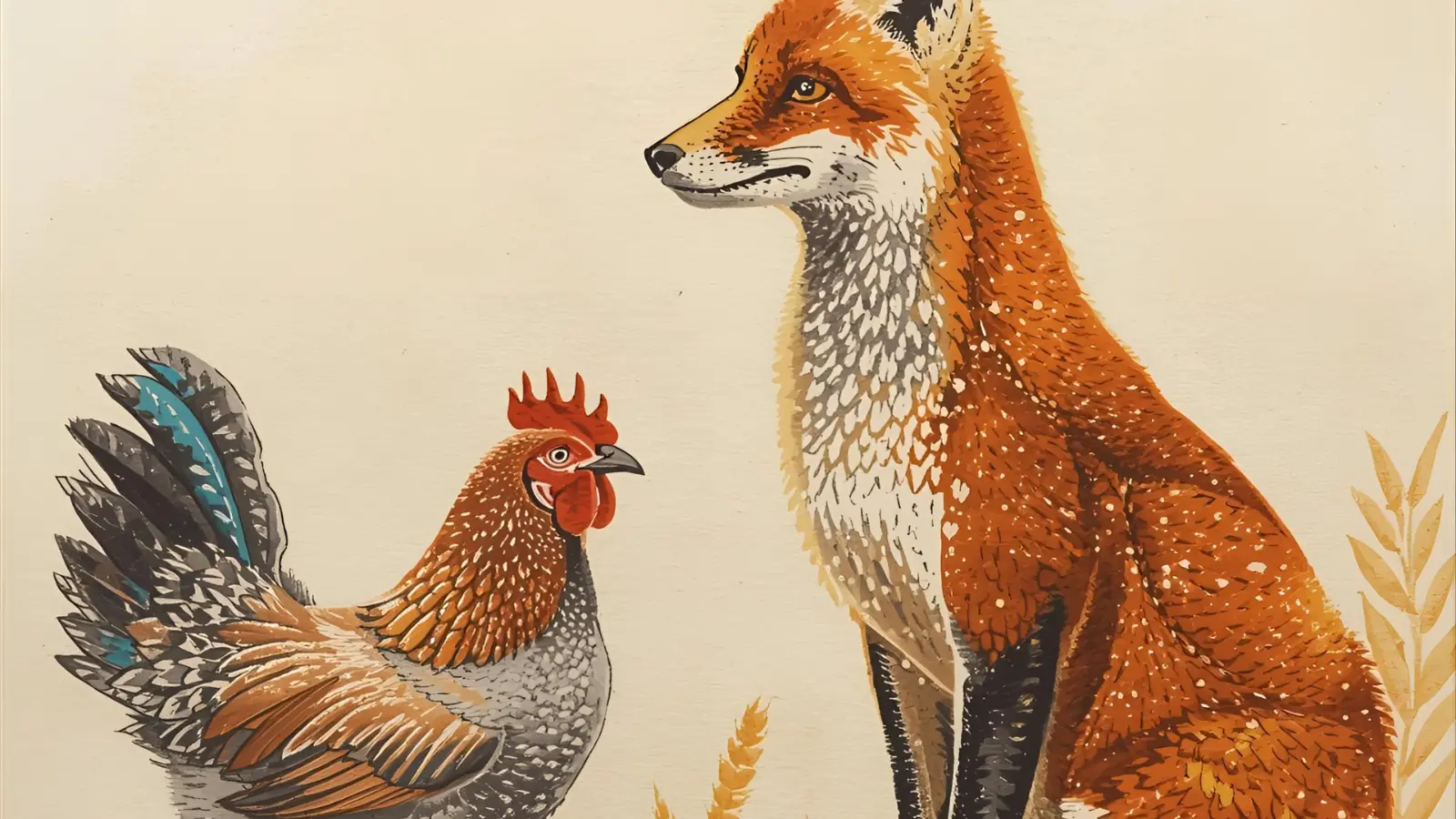
The Chicken, Fox, and Grain Riddle is a classic logic puzzle that has entertained minds for centuries. It challenges reasoning, planning, and patience, making it perfect for kids, adults, classrooms, and team-building exercises.
In this post, we explore original riddles, variations, and clever tips to master this puzzle while keeping the experience fun and engaging.
Classic Chicken, Fox, and Grain Riddles 🐔🦊🌾
- Riddle: You have a chicken, a fox, and a bag of grain. You must cross a river with one at a time. If left alone, the fox will eat the chicken, or the chicken will eat the grain. How do you get all across safely?
Answer: Take the chicken first, return, take the fox, bring the chicken back, take the grain, and finally the chicken. - Riddle: You have a fox, a chicken, and grain. Only one can cross at a time. Leaving the chicken with grain is unsafe. What’s the first move?
Answer: Take the chicken across first. - Riddle: If the fox is left alone with the chicken, who loses?
Answer: The chicken 🐔 - Riddle: If the chicken is left alone with the grain, what happens?
Answer: The chicken eats the grain 🌾 - Riddle: Which item must cross first to ensure safety?
Answer: The chicken 🐔 - Riddle: After taking the chicken first, what should you do next?
Answer: Return alone and take the fox 🦊 - Riddle: After taking the fox, which one must come back?
Answer: The chicken 🐔 - Riddle: After returning with the chicken, which is next?
Answer: Take the grain 🌾 - Riddle: Who crosses last?
Answer: The chicken 🐔 - Riddle: Why can’t the fox and chicken be left alone?
Answer: The fox will eat the chicken 🦊 - Riddle: Why can’t the chicken and grain be left alone?
Answer: The chicken will eat the grain 🌾 - Riddle: What is the key strategy in this puzzle?
Answer: Always prevent unsafe pairings and plan steps ahead 🧠
Funny Chicken, Fox, and Grain Variations 😂🐔🦊
- Riddle: What happens if the fox tweets about the chicken?
Answer: The chicken panics and delays the crossing 🐔📱 - Riddle: If the fox wears sunglasses, can it still eat the chicken?
Answer: Yes, logic is not affected 😎🦊 - Riddle: If the chicken has a superhero cape, what happens?
Answer: It still needs to follow the same crossing rules 🐔🦸♂️ - Riddle: If the grain is gold instead of wheat, what changes?
Answer: The crossing logic stays the same 💰🌾 - Riddle: Can the fox ride the boat with both the chicken and grain?
Answer: No, only one item can cross at a time 🛶 - Riddle: What if the chicken is a rooster?
Answer: The puzzle’s logic does not change 🐓 - Riddle: Can the fox cross first?
Answer: Yes, but then you must bring the chicken back to prevent it being eaten 🦊 - Riddle: What if the chicken sings a lullaby to the grain?
Answer: The grain remains safe, but the crossing sequence is the same 🎵🐔 - Riddle: If the fox likes the grain, is it safer?
Answer: Not really, the chicken still cannot be left with the fox 🦊🌾 - Riddle: What if all three refuse to cooperate?
Answer: You have a logic problem, not a real crossing problem 😅 - Riddle: Can the boat cross empty?
Answer: Yes, but strategy must be planned 🛶 - Riddle: Who is the smartest: the fox, chicken, or grain?
Answer: You are! Planning ensures all get across safely 🧠
Clever Logic Riddles Inspired by Chicken, Fox, and Grain 🧩🧠
- Riddle: You have three items with conflicting needs. How do you ensure none gets eaten?
Answer: Sequence crossings carefully 🐔🦊🌾 - Riddle: Why is returning an item sometimes necessary?
Answer: To prevent unsafe pairings 🧠 - Riddle: What is the principle behind this puzzle?
Answer: Prevent leaving unsafe pairs together 🔑 - Riddle: How does planning ahead help in this puzzle?
Answer: Reduces risk of errors and ensures success 🧩 - Riddle: If the boat can carry two items, does the puzzle change?
Answer: Yes, but the sequence must still prevent unsafe pairs 🛶 - Riddle: Is there more than one solution?
Answer: Typically, there’s one main solution that ensures safety ✅ - Riddle: Why is patience key?
Answer: Because each move depends on the previous one ⏳ - Riddle: What cognitive skills does this puzzle teach?
Answer: Logical reasoning, sequencing, and problem-solving 🧠 - Riddle: Can this puzzle be turned into a team game?
Answer: Yes, planning together enhances learning 🤝 - Riddle: What if the chicken and fox refuse to cooperate?
Answer: Then it becomes an imagination puzzle 🐔🦊 - Riddle: How does variation in items change difficulty?
Answer: New items can increase complexity but the logic principle stays the same 🧩 - Riddle: Why is this puzzle timeless?
Answer: It’s simple yet challenges planning, logic, and patience for all ages ⏳
Educational Chicken, Fox, and Grain Challenges 🏫🐔
- Riddle: How does this puzzle teach sequencing?
Answer: Step-by-step crossing prevents mistakes 🧠 - Riddle: How does it teach cause-and-effect?
Answer: Each decision impacts safety of items 🔄 - Riddle: Can it improve problem-solving skills?
Answer: Absolutely, especially in children and adults 🧩 - Riddle: How can teachers use it in class?
Answer: As a hands-on logic game or story problem 🏫 - Riddle: How does it teach risk assessment?
Answer: By analyzing which items can be safely left together ⚖️ - Riddle: Does it encourage teamwork?
Answer: Yes, solving in groups teaches collaboration 🤝 - Riddle: Can you create variations for different ages?
Answer: Yes, substitute animals or items to adjust difficulty 🐰🦊🌽 - Riddle: How can visual aids help?
Answer: Drawings or tokens make reasoning clearer ✏️ - Riddle: How does it teach planning ahead?
Answer: Anticipate outcomes before taking action 🧠 - Riddle: Can it enhance memory skills?
Answer: Yes, remembering the sequence strengthens working memory 🧩 - Riddle: Why is repetition beneficial?
Answer: Reinforces logical thinking and pattern recognition 🔄 - Riddle: What’s the ultimate lesson?
Answer: Careful planning avoids mistakes and ensures success ✅
Variations and Fun Twists 🐔🦊🌾
- Riddle: What if the chicken, fox, and grain are replaced with tiger, goat, and cabbage?
Answer: Logic stays the same, sequence changes 🐅🐐🥬 - Riddle: What if the river has rapids?
Answer: Only one item can cross safely at a time 🛶 - Riddle: Can you turn it into a race?
Answer: Yes, fastest correct sequence wins 🏁 - Riddle: What if multiple boats are available?
Answer: Strategy may become simpler but still requires planning 🚤 - Riddle: Can the puzzle be solved backwards?
Answer: Yes, but sequence rules must still be followed 🔄 - Riddle: Can storytelling enhance engagement?
Answer: Yes, creating a story with the animals makes learning fun 📖 - Riddle: What if you introduce more animals?
Answer: Puzzle difficulty increases proportionally 🐔🦊🐐 - Riddle: Can you create digital versions?
Answer: Yes, apps or online games simulate the challenge 💻 - Riddle: What if each item has special abilities?
Answer: Adds complexity but logic remains essential 🧩 - Riddle: Can it be solved cooperatively online?
Answer: Yes, virtual teamwork works well 🤝 - Riddle: What if the fox loves the grain too?
Answer: Still follow the principle: never leave unsafe pairings 🦊🌾 - Riddle: Can you make it a timed challenge?
Answer: Yes, adding a timer increases fun and engagement ⏳
Expert Tips for Mastering the Riddle 🧠💡
- Plan each step: Visualize moves before starting.
- Use tokens or drawings: Represent each item for clarity.
- Teach reasoning: Ask why each move is necessary.
- Practice variations: Substitute items for new challenges.
- Collaborate: Discuss strategies with friends or classmates.
- Break it down: Focus on one move at a time.
- Reflect: Analyze mistakes and learn from them.
- Have fun: Enjoy the puzzle without rushing.
Creative Uses for Chicken, Fox, and Grain Riddles 🎨🐔
- Classroom activities: Teach logic and sequencing.
- Family game night: Fun challenge for all ages.
- Team-building exercises: Encourage collaboration and problem-solving.
- Storytelling prompts: Turn puzzles into creative narratives.
- Online games: Digital adaptations for remote play.
- Math integration: Combine with counting and probability exercises.
- Imagination boosts: Encourage students to create their own variations.
Conclusion
The Chicken, Fox, and Grain Riddle is more than a puzzle—it’s a brain workout, teaching logic, planning, patience, and teamwork. Whether you’re a kid, teacher, parent, or puzzle enthusiast, mastering this classic riddle provides endless fun and intellectual challenge. 🐔🦊🌾🧠
Explore More Helpful Resources
Improve your English skills with practical grammar explanations and useful lessons from Gramors.
Explore modern English usage, vocabulary tips, and language guidance through Languvio.
Discover clearer word meanings and writing insights with LexMints.
Build stronger sentences and improve your writing style with resources from SentenceMint.
Find detailed grammar guides and practical examples at GrammarExplore.
Strengthen your grammar foundation with easy explanations from GramVora.
Understand complex grammar rules and language usage with Grammaticalness.
Expand vocabulary and discover better word choices through Lexivorix.
Explore fascinating words and definitions with Wordiora.
Improve English communication skills with practical resources from EnglishRoleBook.
Learn smarter ways to avoid common English mistakes with GrammarEgo.
Explore English learning resources and language opportunities through GrammarJobs.
Find useful writing answers and communication tips from ResponcesHub.
Build your English foundation with lessons from LearnEnglishGrammars.
Access clear grammar explanations and examples from EnglishGrammarHub.
Learn grammar step by step with structured guides from EnglishGrammarLessons.
Master essential grammar rules through BasicEnglishGrammars.
Solve grammar confusion with helpful explanations from GrammarPilot.
Improve writing accuracy with practical advice from GrammarPeak.
Fuel your English improvement journey with GrammarsFuel.
Explore more English learning ideas through EnglishGrammarlly.
Discover simple writing improvement methods with GrammarlyWay.
Explore deeper meanings and explanations with MeaningMinds.
Discover stories and meanings behind words through MeaningMuse.
Understand difficult concepts with simple guides from MeaningSage.
Find clear definitions and interesting meanings at MeaningOra.
Explore symbols, traditions, and cultural meanings with Symbolara.
Discover symbolism history and interpretations from SymbolicSphere.
Learn about traditional symbols and their meanings through DeepSymbols.
Discover what symbols represent across cultures with SymbolCodex.
Explore fascinating symbolism guides through Symblio.
Understand connections between symbols and culture with SymbolNexus.
Learn how symbols developed over time through SymbolOrigin.
Explore symbolic interpretations with SymbolOracle.
Discover meanings behind important symbols from Symbolora.
Explore ancient symbolism and cultural stories with SymbolLore.
Discover deeper symbol meanings through Symbolistry.
Learn about symbolic designs and historical meanings from Sigilica.
Explore meaningful symbols and interpretations at SymbolicEssence.
Discover dream themes and symbolic ideas through DreamMyths.
Compare choices with clear breakdowns from CompareVex.
Explore side-by-side comparisons through VSCompareLab.
Make informed decisions with comparison guides from CompareChoiceX.
Review differences and options with VarioCompare.
Explore celebrity profiles and entertainment insights from FameOrbits.
Discover celebrity facts and profiles through CelebCrest.
Stay updated with technology guides from TechViore.
Explore mobile app resources through APKVerO.
Discover Android and app information with APKivo.
Find creative online resources through CoverVesto.
Explore helpful educational resources from Avliera.
Explore helpful digital resources and practical guides through Serphixa.
Discover wellness ideas, fitness insights, and lifestyle resources from FitNoova.
Find additional online resources and useful information through SerfHexa.
Explore more helpful guides and digital resources with SerpHexa.
Learn more about financial insights and useful resources from Finssure.
Improve grammar understanding with clear explanations from GrammarClarity.
Explore practical grammar lessons and writing tips through GrammarMint.
Find creative slogan ideas and branding inspiration with Sloganifiy.
Discover creative captions, ideas, and inspiration from Picklinezz.
Understand confusing words and language differences through LingoClarity.
Find simple definitions and clear explanations with DefineBly.
