
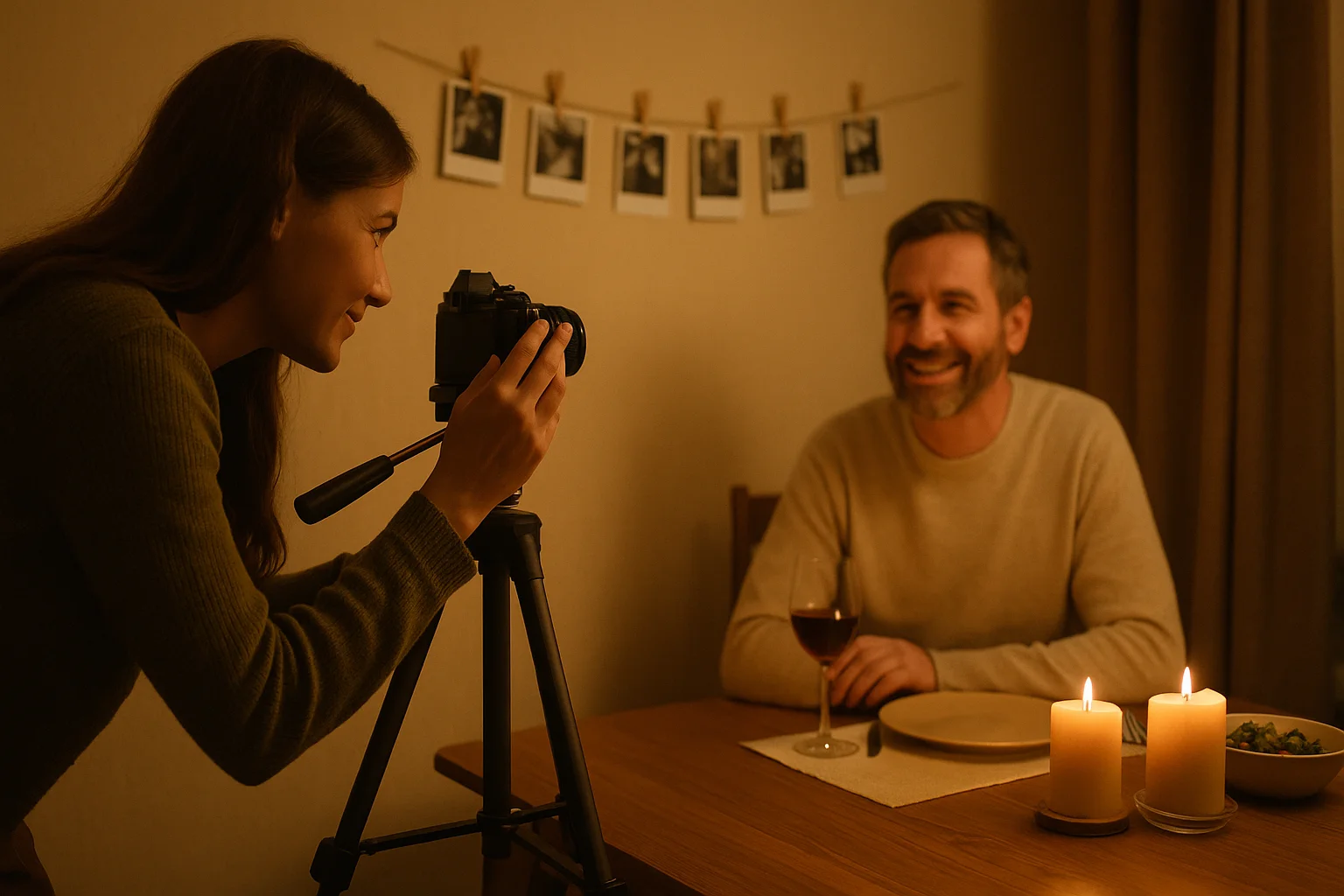
If you’ve heard the line “A woman shoots her husband” and felt uneasy, you’re not alone. On first listen, it sounds like the start of a crime story, not a playful brain teaser. But this classic riddle is actually about old-school photography, not harm or violence.
In this guide, we’ll walk through the full riddle, give you the exact answer, explain every line step by step, and show you when and how to use it safely with friends, family, or students. By the end, you’ll know the solution and why this puzzle fools so many people at first.
Quick Answer
The “A woman shoots her husband” riddle is harmless.
The woman is a photographer: she shoots a picture of her husband, develops the photo in liquid, hangs the print up to dry, and then goes to dinner with her very alive husband.
Table of Contents
- What Is The “A Woman Shoots Her Husband” Riddle?
- The Exact Riddle Text And Common Variations
- Short Answer To The Riddle In One Line
- Step-By-Step Explanation Of How The Riddle Works
- Why This Riddle Sounds So Dark At First
- What “Shoots” Really Means In This Brain Teaser
- Old-School Photography And The Underwater Part
- Why She “Hangs” Her Husband In The Riddle
- How To Use This Riddle With Kids Or Students
- Similar Riddles With Scary Setups And Safe Endings
- Lateral Thinking Tips For Solving Riddles Like This
- Common Wrong Answers People Jump To First
- Fun Ways To Share This Riddle On Social Media
- Clean Variations And Spin-Off Riddles You Can Try
- When Not To Use This Riddle (Context Matters)
- Quick Recap Of The “A Woman Shoots Her Husband” Riddle
- FAQs
- Conclusion
TL;DR
• The woman is a photographer, not an attacker.
• She “shoots” him with a camera, not a weapon.
• The “underwater” line refers to photo developing fluid.
• She “hangs” the picture up to dry, not the man.
• They go to dinner together because he’s completely fine.
What Is The “A Woman Shoots Her Husband” Riddle?
This riddle is a tiny story that sounds like a crime but hides a gentle twist. It relies on everyday words that have more than one meaning, nudging your brain toward the darkest option first.
In most versions, you hear that a woman shoots her husband, holds him underwater for several minutes, then hangs him. Only at the end do you find out they enjoy a wonderful dinner together. Your job is to explain how that’s possible.
• The puzzle is built on wordplay, not real harm.
• It sits in the “lateral thinking” family of situation puzzles.
• The “husband and wife” detail makes it feel dramatic and personal.
• The final dinner line proves he must have survived.
• The riddle tests how quickly you jump to scary assumptions.
• It rewards people who remember gentler meanings of bold words.
• The whole trick depends on “shoots” doing double duty.
• It’s easy to memorize and retell in groups.
The Exact Riddle Text And Common Variations
You’ll see slightly different versions, but they all tell the same short story. A typical version looks like this:
“A woman shoots her husband, then holds him underwater for five minutes. Next she hangs him, then they go out together and enjoy a wonderful dinner. How is this possible?”
Writers often change small details without touching the core idea.
• Some say “over five minutes,” others say “for several minutes.”
• A few versions mention “over ten minutes” to sound even more dramatic.
• The ordering words may switch from “finally” to “next.”
• The last line might say “they enjoy a wonderful dinner together” or “they go out to dinner.”
• Slideshows sometimes spread each sentence across separate slides for suspense.
• Teachers may shorten the wording for younger students.
Whatever the exact phrasing, the husband always ends alive and eating.
Short Answer To The Riddle In One Line
If you just want the solution in one clear sentence:
The woman is a photographer taking and developing a picture of her husband.
Once you see that, everything in the riddle suddenly lines up.
• She “shoots” him with a camera, not anything harmful.
• The “underwater” step is the photo soaking in a chemical bath.
• She “hangs” the wet print on a line so it can dry.
• Then the real husband and his new photo both exist just fine while they go to dinner.
Step-By-Step Explanation Of How The Riddle Works
To really understand the riddle, you can match each sentence to a photography step. That’s where the misdirection disappears and the logic becomes simple.
• Step 1: “A woman shoots her husband.”
– She takes a picture of him with a camera.
– “Shoot” here means “snap a photo,” not fire a weapon.
• Step 2: “Then she holds him underwater for five minutes.”
– “Him” now refers to the photograph of her husband.
– The photo paper sits in a tray of developing chemicals that look like liquid.
• Step 3: “Next she hangs him.”
– Again, “him” is the photo, not the man.
– She clips the wet print to a drying line so it won’t smear or curl.
• Step 4: “Then they go out together and enjoy a wonderful dinner.”
– Her husband was never in danger, so they simply go eat.
– The finished picture can dry safely while they’re gone.
Every line matches a normal photography process once you switch your picture from “crime scene” to “photo shoot.”
Why This Riddle Sounds So Dark At First
The riddle hooks people by sounding like a true crime headline. Your brain fills in missing details long before the story is finished.
Hearing “shoots her husband,” most people instantly imagine a weapon. Add “underwater” and “hangs” and the scene seems clear—until the dinner part breaks it. That conflict is what makes the riddle so memorable.
• “Shoots,” “underwater,” and “hangs” all carry heavy associations.
• Your mind grabs the most dramatic meaning of each word.
• You silently add things the riddle never mentions: blood, police, crime.
• The story never actually says he dies or is injured.
• The final “wonderful dinner” forces you to rethink the whole picture.
• The relief you feel when you learn the camera twist is part of the fun.
• It’s a good reminder that first impressions aren’t always accurate.
What “Shoots” Really Means In This Brain Teaser
Everything hinges on the word “shoots.” English uses it in lots of everyday ways, not just for weapons. The riddle only works if you forget that for a moment.
• “Shoot” can mean to fire a gun.
• It can also mean to take a photograph with a camera.
• We talk about “photo shoots” for weddings, family pictures, and ads.
• Filmmakers run “shoots” when they record scenes.
• Athletes and gamers “shoot” hoops, arrows, or balls.
• Friends say “shoot me a text” with zero drama.
The riddle never mentions a gun, bullets, or injuries. Once you allow “shoot” to mean “take a photo,” the story changes from dangerous to everyday in one step.
Old-School Photography And The Underwater Part
If you mainly use phones, “holding someone underwater for five minutes” sounds extreme—and that’s what the riddle is counting on. But in a darkroom, photos really do sit in trays of liquid for several minutes.
• Traditional prints are made on light-sensitive paper.
• After the image is exposed, the paper goes into pan-like trays filled with chemicals.
• To a casual observer, the sheet looks “underwater” in clear or tinted liquid.
• The paper stays there long enough for the picture to fully appear.
• The husband himself is nowhere near that tray—only his image is.
It’s a tiny film-era detail that modern audiences don’t always recognize, which is why this riddle still works even in a digital world.
Why She “Hangs” Her Husband In The Riddle
“Hanging” sounds like the final, harsh step if you’re thinking about people. In photography, it’s just how you dry a wet print.
Darkrooms often have lines or wires overhead. Photographers clip finished prints there so they can dry flat without smearing.
• The husband is never hung—only the photo is.
• “Hang” here is like hanging laundry or decorations.
• The word is chosen precisely because it suggests something darker.
• When you shift to the photography meaning, the tension disappears.
• Once the photo is hung, her work is done and dinner makes perfect sense.
How To Use This Riddle With Kids Or Students
Used carefully, this riddle can be a powerful tool for teaching close reading, context clues, and flexible thinking. The key is to frame it as a word puzzle, not as a “shocking” story.
• Introduce it as a language trick where no one gets hurt.
• Read slowly so every word has time to land.
• Ask students to list the words that sound dangerous.
• Then have them brainstorm softer meanings for those same words.
• Gently steer them toward cameras and photo shoots.
• Reveal the full photography explanation once guesses slow down.
• Emphasize that the husband is safe the entire time.
• Use it to talk about how headlines and stories can mislead.
• Offer alternative, gentler riddles if anyone looks uncomfortable.
Similar Riddles With Scary Setups And Safe Endings
This puzzle belongs to a group of riddles that sound dark but end harmlessly. They’re designed to force your brain to move sideways and question its own assumptions.
Examples (in general terms) include:
• Riddles about “deadly rooms” that turn out to be safe by logic.
• Puzzles with lions, fire, or guards that hide a simple loophole.
• Stories where “everyone dies” but they’re fictional characters or game pieces.
• Short mysteries with impossible situations that rely on job roles (like magicians or doctors) for the twist.
Collecting a few of these lets you run a whole mini session of “scary setup, safe ending” brain teasers.
Lateral Thinking Tips For Solving Riddles Like This
If you ever solved this riddle on your own, you were already using lateral thinking—looking for an answer that doesn’t follow the straight-line assumption. You can build that skill with a few simple habits.
• When a story sounds violent, ask: Could this be symbolic or playful?
• Check every bold verb for multiple everyday meanings.
• Think about jobs or hobbies that might fit the actions.
• Look at the final line (“they have dinner”) and work backward.
• Ask: How could everyone still be safe here?
• List at least two or three different explanations before you decide.
• Notice what the riddle never actually says out loud.
• Remember that puzzle writers avoid direct statements on purpose.
• Share your reasoning, not just your answers, when you play in groups.
Common Wrong Answers People Jump To First
Before the twist is revealed, people often invent complex stories to explain how the couple ends up at dinner. Those wrong answers are useful—they show exactly where our imaginations run off the page.
Common guesses include:
• She really killed him and later ate alone.
• He was hurt but revived by doctors before dinner.
• The dinner is a flashback or dream sequence.
• The “husband” at dinner is a twin or a double.
• The man at dinner is his ghost.
• The whole thing is symbolic and not meant to be literal at all.
Every one of these theories works only if you keep the violent meaning of “shoot.” None of them need to exist once you remember cameras.
Fun Ways To Share This Riddle On Social Media
Because the opening line sounds dramatic, this riddle spreads quickly online. Shared thoughtfully, it can spark fun comments about language without upsetting people.
• Post the riddle as text with “It’s a word puzzle, not a crime—can you solve it?”
• Use camera or film-reel emojis instead of dark imagery.
• Reveal the answer in a second slide, story, or comment.
• Ask followers what they guessed before seeing the solution.
• Turn the explanation into a reaction reel showing the “aha!” moment.
• Invite teachers and parents to share how they would present it to kids.
• Avoid gory photos or crime-scene style designs—keep it friendly.
Clean Variations And Spin-Off Riddles You Can Try
If you like the photography twist but want softer wording, you can easily rewrite the riddle without the sharpest verbs. The logic stays the same, but the mood lightens.
• Replace “shoots her husband” with “takes a picture of her husband.”
• Change “holds him underwater” to “soaks the picture in a solution.”
• Switch “hangs him” to “hangs the photo up on a line.”
• Make a version about a friend, sibling, or pet instead of a spouse.
• Write new riddles where “capture,” “frame,” or “freeze time” all secretly mean photography.
• Ask kids to rewrite the original in a way that still tricks people but sounds less harsh.
When Not To Use This Riddle (Context Matters)
Even with a harmless answer, the opening words may feel too intense in some settings. Good hosts, teachers, and friends always think about their audience first.
• Avoid this riddle around people dealing with recent loss or trauma.
• Be careful in classrooms with strict rules about violent language.
• Skip it at work events where tone needs to stay very neutral.
• Don’t use it with very young children who may fixate on the scary words.
• Have gentler riddles ready if anyone looks uneasy.
• When in doubt, choose a puzzle that doesn’t mention shooting or hanging at all.
Fun riddles should feel safe and comfortable for everyone listening.
Quick Recap Of The “A Woman Shoots Her Husband” Riddle
At first, the “A woman shoots her husband” riddle sounds like the start of a grim story. Once you slow down and look for friendlier meanings, it becomes a clean little word game about photography.
The woman is a photographer. She shoots a picture of her husband, develops the print in liquid, hangs the photo up to dry, and then goes out to dinner with him. Every “dark” line in the story has a simple, harmless explanation once you change your point of view.
• The setup feels scary because of strong word choices.
• The solution is peaceful as soon as you think about cameras.
• The real “trick” happens in your assumptions, not on the page.
• You can now share this riddle thoughtfully and explain the twist clearly.
FAQs
What is the actual answer to the “A woman shoots her husband” riddle?
The woman is a photographer. She shoots her husband with a camera, develops the photo in liquid, hangs the print up to dry, and then goes to dinner with her very much alive husband. No one is harmed in the story.
How can she hold him underwater for five minutes without hurting him?
She never holds the real man underwater at all. The “underwater” part refers to the photograph sitting in a shallow tray of developing chemicals, which looks like paper under clear liquid.
Why does the riddle mention that they later enjoy a wonderful dinner?
The dinner detail proves the husband survives and makes the story feel impossible if you assumed violence. Once you realize the photography twist, dinner is just a normal ending after a photo session.
Is this riddle too dark to use with children?
It depends on their age and sensitivity. Some kids find the wording unsettling until they hear the answer, so it’s best to present it as a language puzzle, reveal the harmless twist quickly, and be ready with softer riddles if anyone seems uncomfortable.
What can this riddle teach about critical thinking?
It’s a clear example of how our minds fill in details that were never said. Walking through the puzzle shows how word choice, context, and assumptions shape our first reactions—and how slowing down can lead to better understanding.
Are there other riddles like this one?
Yes. Many classic riddles use scary-sounding setups that end with safe explanations—deadly rooms that turn out safe, dangerous animals that can’t actually hurt anyone, or impossible escapes that rely on clever wording instead of harm.
Conclusion
The “A woman shoots her husband” riddle proves how a few loaded words can trick our brains into seeing danger where there isn’t any. Once you realize she’s just a photographer developing and hanging a picture, every scary detail suddenly becomes harmless. That twist is what makes the puzzle fun—and a great reminder to slow down, question first impressions, and look for softer meanings before jumping to the worst-case scenario. Now that you know the answer, you can share the riddle confidently and let others enjoy that same satisfying “ohhh, it was just a camera!” moment.
